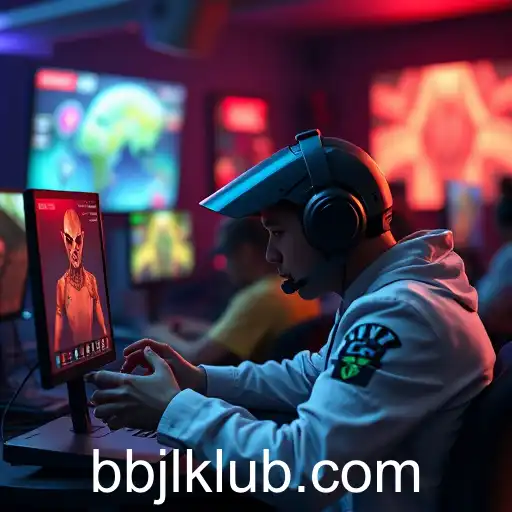
Simulation games have been a staple in the gaming industry, offering players the opportunity to delve into meticulously crafted worlds that mirror real-life systems or imaginative scenarios. From life simulators like 'The Sims' to immersive city-builders like 'SimCity', this genre allows players to engage with complex systems in a unique, interactive manner.
One of the key appeals of simulation games is their ability to offer players a sense of control and creativity. Unlike other genres that may rely on linear narratives or fast-paced action, simulation games encourage players to take the reins, shaping their environment according to their own desires and strategies. This freedom to explore and experiment has drawn in a diverse audience, where players can create their realities without real-world constraints.
The inclusion of 'bbjl' as a keyword on a gaming website suggests a niche or special feature related to simulation games. Whether it represents a specific game, a developer's tag, or a community feature, such keywords serve to connect players with content that aligns with their specific interests within the vast simulation genre. By utilizing these targeted keywords, gaming platforms enhance discoverability, allowing users to access related content, discussions, and updates more efficiently.
Innovation within simulation games continues to evolve, as developers explore emerging technologies like virtual reality (VR) and augmented reality (AR) to create more immersive experiences. The integration of these technologies has the potential to redefine how players interact with simulation games, offering more tactile and engaging experiences. These advancements not only enhance realism but also push the boundaries of what is possible within the genre.
Moreover, the simulation genre has increasingly focused on incorporating educational and training elements, transforming games into tools that offer practical applications. Whether it's pilots using flight simulators to hone their skills or aspiring city planners experimenting with urban layouts, the applications of simulation games extend beyond entertainment, providing valuable platforms for learning and skill development.
Despite the complex systems and mechanics at play, simulation games remain accessible to a wide range of users, from casual gamers looking for a leisurely experience to enthusiasts seeking deeper, more challenging systems to master. This broad appeal is further enriched by dedicated communities that thrive on sharing modifications, strategies, and tips, fostering a collaborative environment where players contribute to the evolution of the games they love.
In conclusion, simulation games occupy a unique space within the gaming landscape, continuously evolving and captivating players with their depth and versatility. With innovations on the horizon and a community eager to explore the limits of virtual worlds, the future of simulation games promises to be both exciting and transformative, engaging players and professionals in new and unforeseen ways.